
How to build young people's agency through accessible learning
We think computing or computer science (CS) needs to be accessible to all learners, and we know that teachers work hard towards this. Traditional CS approaches can lack flexibility, creating barriers to learning and excluding some young people. In today’s blog, we’re highlighting the ‘Universal design for learning’ (UDL) framework and how you can use it to make computing education more accessible to all your learners.

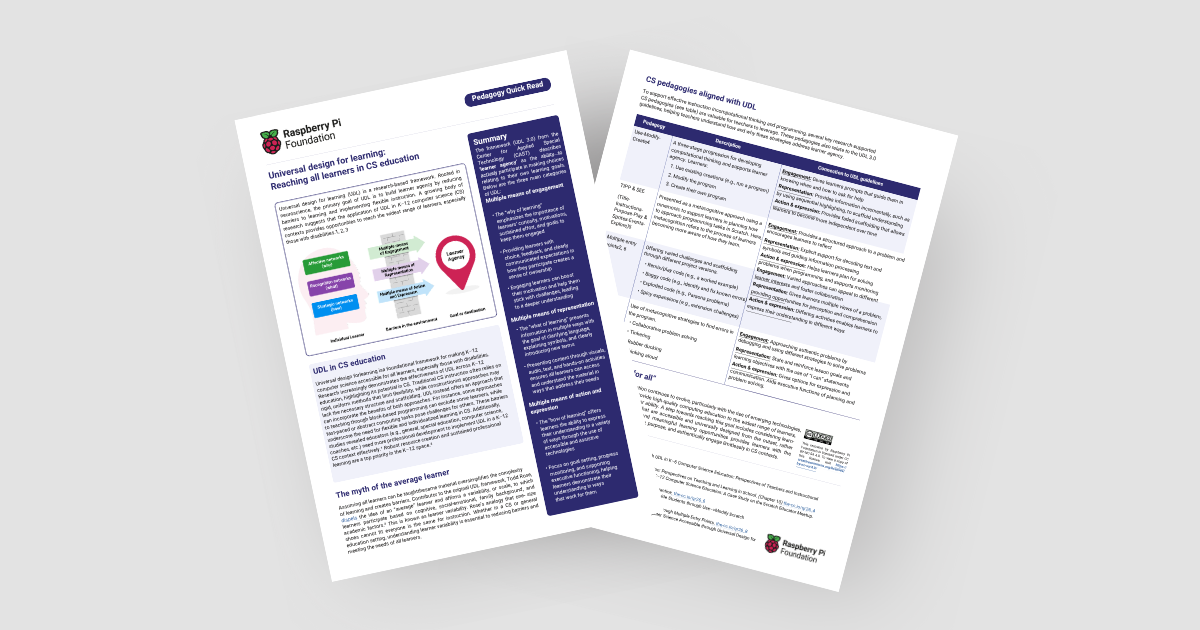
We also share our new UDL-focused Pedagogy Quick Read, which you can download for free to:
- Find practical tips for how to use the UDL framework and related approaches with your learners
- Read a summary of the research behind the framework
Universal Design for Learning: Because one size does not fit all
Everyone is different and has their own way of learning. What works for one young person may not work for the next. So why should we expect learners to be taught the same material in the same way?
Todd Rose, a contributor to the UDL framework, highlights the factors involved with a young person’s ability to engage and participate in learning. These include cognitive, social-emotional, family background and academic factors. He dispels the idea of an “average” learner, and instead suggests the concept of learner variability.
As educators, it’s important to consider that students will likely be at different stages of understanding, and a one-size-fits-all approach isn’t suitable. The UDL framework avoids this mindset and provides teachers with structured guidelines to design accessible lessons from the beginning.
What is the UDL framework?
The UDL framework encourages educators to provide flexibility for learners in three areas:
- Multiple means of engagement: The “why of learning”, which helps to pique students’ curiosity and motivates them to stay engaged
- Multiple means of representation: The “what of learning”, which focuses on presenting information in different ways to make the content accessible
- Multiple means of action and expression: The “how of learning”, which relates to different ways for students to access learning and express their understanding
How can I apply the UDL framework?
Two things are key while you are planning how to apply the UDL framework with your learners:
- Try not to introduce all three areas at once to your practice. Instead, focus on one area of the framework at a time and reflect to identify where there might be gaps. Focus on these first and make changes one by one.
- Consider how different approaches will work for different groups and individuals. Try to identify what works for your learners and vary or adapt your approach as necessary.
Applying UDL: Some ideas for teaching programming
Multiple means of engagement — show learners different reasons for engaging in programming. For example:
- Solving real-life problems
- Interest in technology or logical thinking
- Creative expression
Multiple means of representation — teach programming concepts in multiple ways. For example:
- Demonstrate through live coding
- Write on a blackboard with a flowchart
- Let learners label and assemble bits of paper into a ‘program’
Multiple means of action and expression — teach with accessibility in mind. For example:
- Use tools appropriate for learners’ mouse and keyboard skills
- Let learners demonstrate their understanding in different ways (e.g. verbally, by writing/drawing, by creating a program)
The UDL framework aligns closely with several key research-supported pedagogies that you can use for effective instruction in computational thinking and programming. For example, the pedagogy approach ‘Use-Modify-Create’ (UMC) can be paired with the UDL categories. The new Quick Read explores these connections in more detail.

The benefits of the UDL framework
Potential benefits for teachers:
- The framework provides a clear structure for designing learning activities that appeal to and engage the widest set of learners
- It can help you consider all the ways you might engage your learners and make CS lessons more accessible.
- UDL encourages you to reflect on the different ways in which you might represent concepts and ideas
- It can help you to build learner agency and independence in your students by offering them different ways to express their learning in CS topics.
Potential benefits for learners:
- The framework promotes a sense of ownership over their learning. Which can boost their motivation and resilience to sticking with difficult challenges.
- They will likely find content that resonates with them, leading to higher engagement and therefore learning.
- They will be able to demonstrate their CS knowledge confidently and engage limitlessly in CS contexts.
Our new Quick Read shares tips on how to best use the framework in your teaching.
Inclusive computer science: The wider context
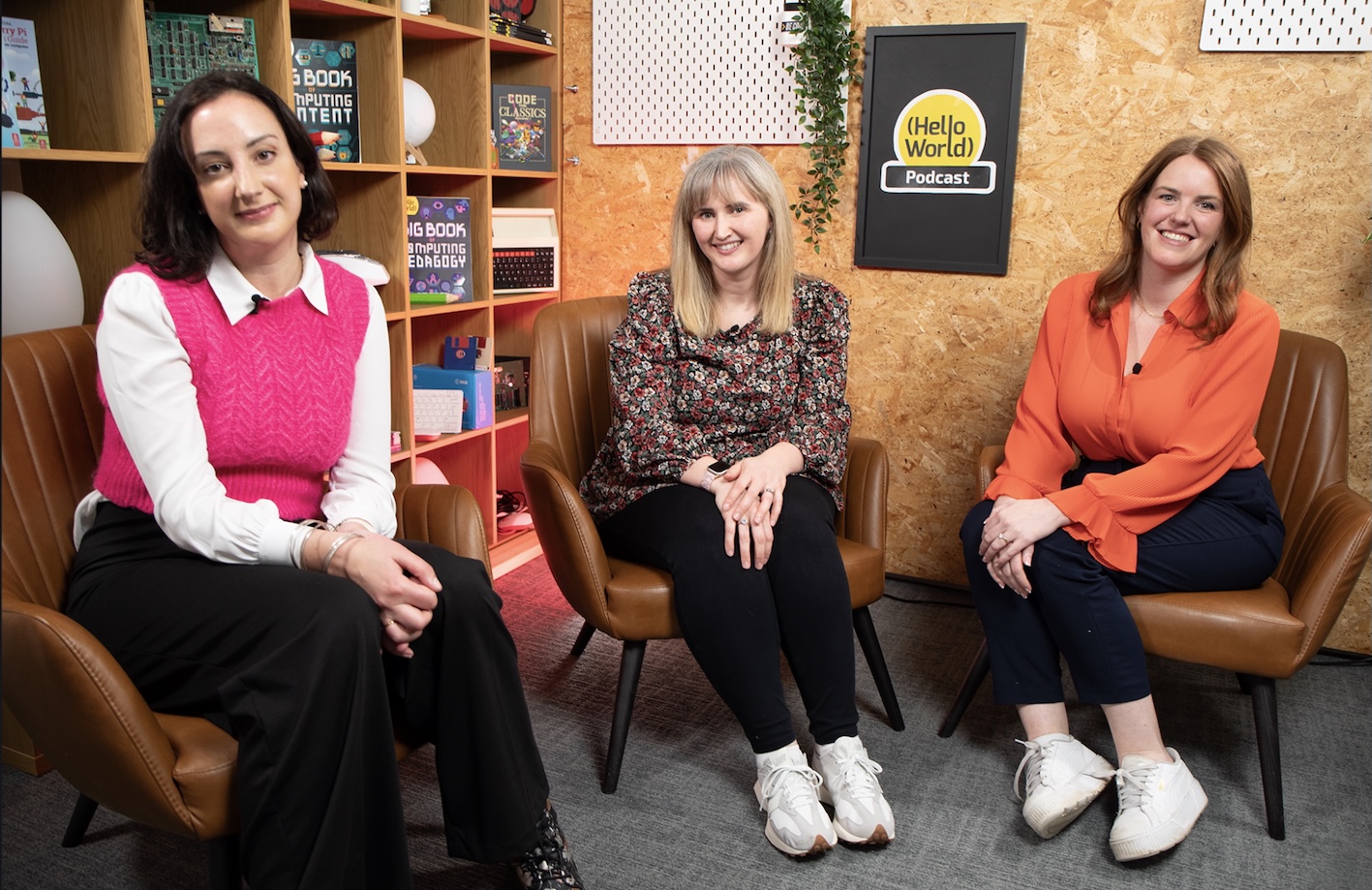
We know there is a lack of representation within the field of CS. Our recent position paper ‘Why kids still need to learn to code in the age of AI’ and an episode of the Hello World podcast, ‘How can we empower girls in computing’ touched on this. Both highlight why it’s important that learners from all backgrounds are empowered to contribute their perspectives and experiences and shape the future with computing.
“The reality is that access to the opportunities to learn about computer science, programming, and coding has remained deeply unequal, both within and between countries. That has helped create a technology sector that doesn’t reflect the broad diversity of human backgrounds, perspectives, and experiences. And we are all living with the consequences.” – Philip Colligan, Mark Griffiths, Veronica Cucuiat
“If we don’t have a diverse range of people designing and implementing that tech, then we are going to come across issues.” – Becky Patel, Tech She Can, Hello World podcast”
By embracing the principles of ‘Universal design for learning’ and similar approaches, we can create a more inclusive and equitable learning environment in computer science for everyone.
The post How to build young people’s agency through accessible learning appeared first on Raspberry Pi Foundation.
https://www.raspberrypi.org/blog/how-to-build-young-peoples-agency-through-accessible-learning/
"
Privacy Policy - Cookie Notice
This website is an independnt endeavor and not
associated with the Raspberry Pi Foundation.